
Why “100 metres” does not mean 100 metres.
Water resistance is tested by putting a watch in a chamber and applying static pressure equal to a given depth. Real use is not static: moving your arm through water, diving in, or a jet of water creates brief pressure spikes, and temperature changes make gaskets contract. That is why brands give conservative real-world guidance well below the number on the dial.
Ratings are written in metres, bar or atmospheres (ATM). One bar is roughly one atmosphere and roughly ten metres of water, so 10 bar, 10 ATM and 100 m all describe the same rating.
What each rating is good for.
This is general guidance. Always follow the specific guidance in your watch’s manual; some brands are stricter than this table.
What makes a real dive watch.
The international standard for dive watches is ISO 6425. Among other requirements, a watch marked “Diver’s” must be rated to at least 100 m and is tested beyond its rated pressure, needs a unidirectional rotating bezel or another way to show elapsed time, and must be readable in the dark at a set distance. It is also tested for resistance to magnetism, shocks and salt water.
Plenty of watches are rated to 200 m without ISO 6425 certification. They can be excellent swimming and diving companions, but the dial marking tells you which ones were tested to the standard. General water resistance is covered by a separate standard, ISO 22810.
What protects the watch.
- Gaskets: rubber seals at the caseback, crystal, crown and pushers. They harden and shrink over time.
- Screw-down crown: threads onto the case to seal it. Most dive watches have one. If yours does, always screw it down before water contact.
- Screwed or sealed caseback: a solid screw-in back seals better than a press-fit back.
- Pushers: chronograph pushers are a weak point unless they screw down. Never press them underwater unless the watch is rated for it.
How to keep a watch water-tight.
- Push in or screw down the crown before any water contact.
- Do not operate the crown or pushers while wet or underwater.
- Rinse with fresh water after the sea or a chlorinated pool.
- Avoid hot showers, saunas and hot tubs: heat and steam stress the gaskets.
- Have the water resistance pressure-tested when the battery is changed or the watch is serviced, or yearly if you swim with it often.
Straps matter too.
A 200 m case on a leather strap is still a dry-day watch, because water ruins leather. For swimming, choose rubber, FKM, a NATO strap or a metal bracelet. Strap and bracelet types.
Water-ready watches we recommend.
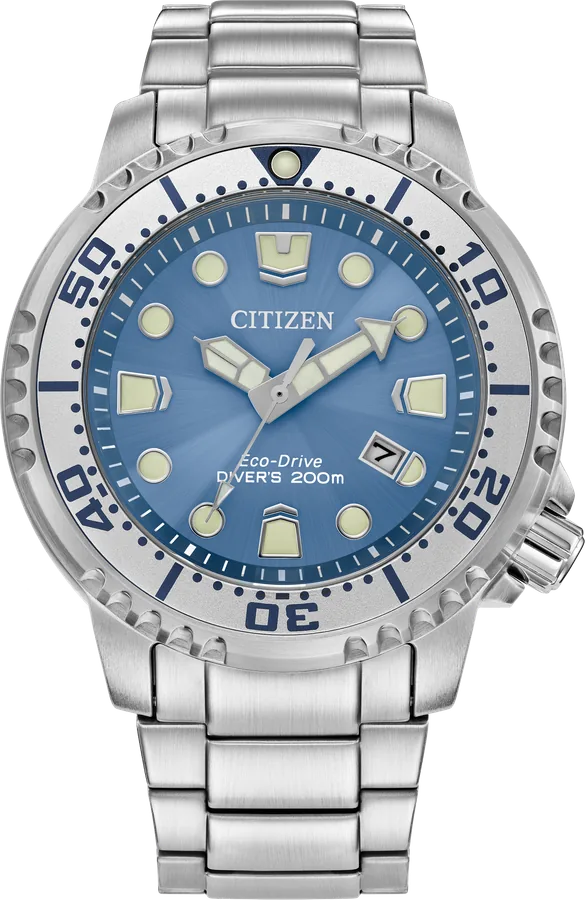
Promaster Dive Eco-Drive Light Blue
A solar-powered diver that never needs a battery
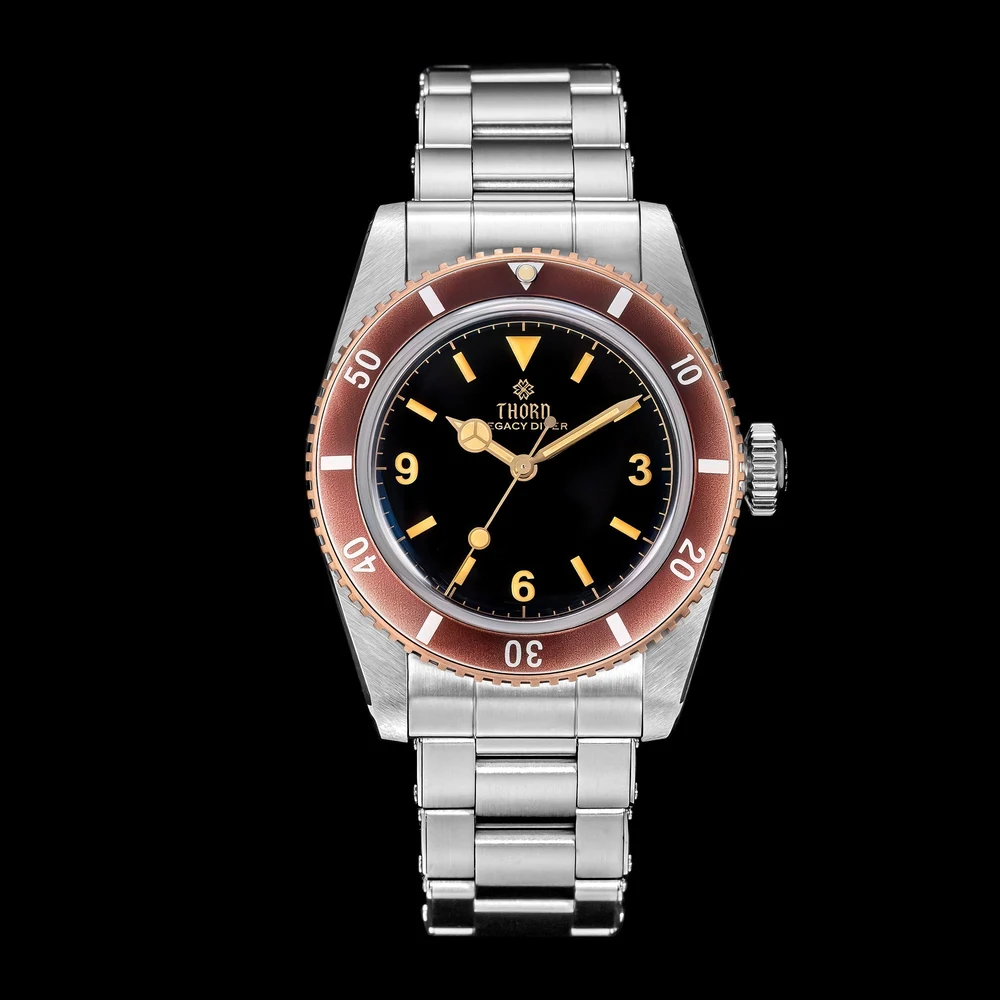
T028 37mm PT5000 Automatic Dive Watch (Black Dial)
A compact black-dial diver with two interchangeable bezels.
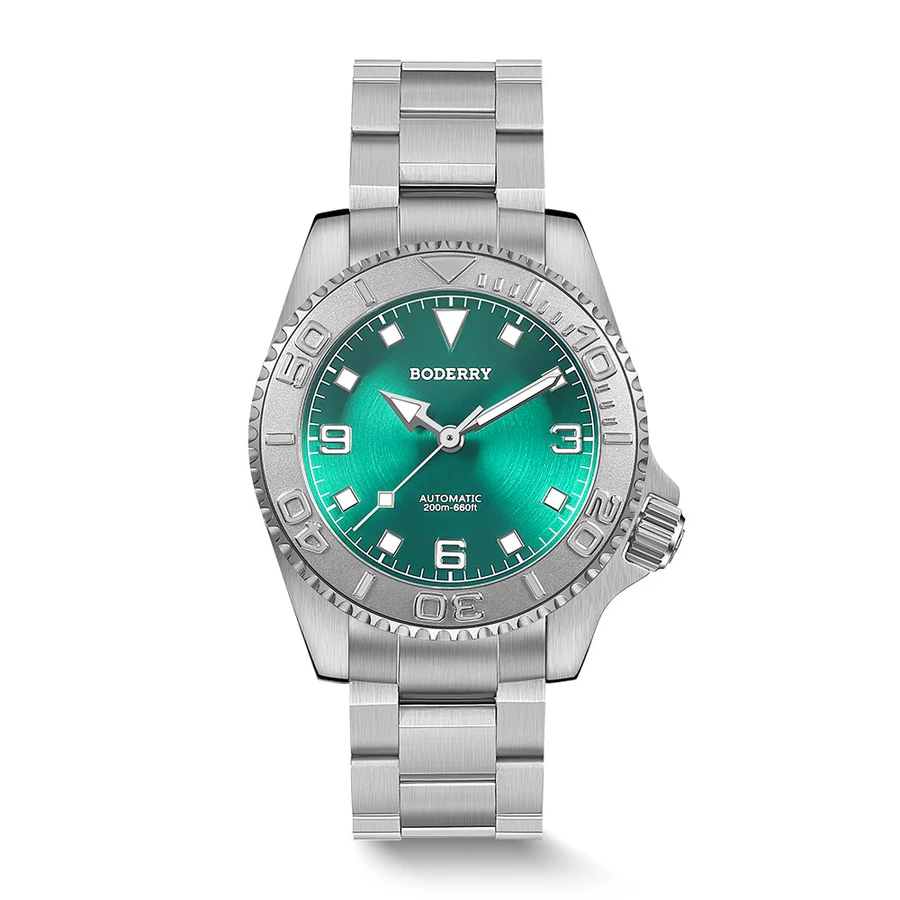
Admiral 3-Hand No-Date Titanium Diver (Aurora Green)
Titanium and a clean green dial in a 40 mm diver
A few good questions.
Can I shower with a 50 m water-resistant watch?
We would not. Hot water and steam stress the gaskets, and soap can degrade them. Most brands advise against showering with a watch below 100 m, and many advise against hot showers with any watch.
Can I swim with a 100 m watch?
Yes. A 100 m (10 bar) rating is generally fine for swimming and snorkeling, provided the crown is pushed in or screwed down and the seals are in good condition.
What does ISO 6425 mean on a dive watch?
It is the international standard for dive watches. A watch marked “Diver’s” must meet requirements for water resistance, a timing bezel or equivalent, legibility in the dark, and resistance to shocks and magnetism.
How often should I test my watch’s water resistance?
When the battery is changed or the watch is serviced, and once a year if you swim with it regularly.
How we write guides: we explain watchmaking from manufacturer documentation and published standards, and say plainly where numbers vary by brand or movement. Our approach.