
How it works.
A quartz oscillator keeps time and drives the hands with a stepping motor. When you press a pusher, a mechanical arrangement engages the chronograph hand. Seiko’s VK64 is the best-known example, and BODERRY lists a TMI VK68 in its Goldace chronograph.
Mecha-quartz vs quartz vs automatic.
Pros and cons.
- Pro: accurate, light and inexpensive.
- Pro: an instant-reset chronograph hand on many models.
- Con: needs a battery change.
- Con: no mechanical movement to see or enjoy.
Who should buy one.
If you want a chronograph for the look and for timing, and do not care about a mechanical calibre, a mecha-quartz is the sensible choice. How to use a chronograph covers the pushers and sub-dials.
Chronographs to consider.
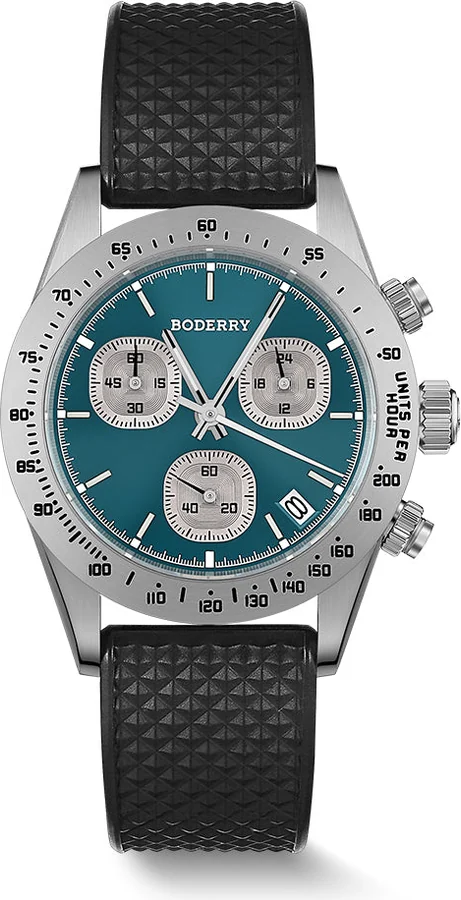
Goldace Titanium Chronograph (Blue, FKM)
An entry titanium mecha-quartz chronograph
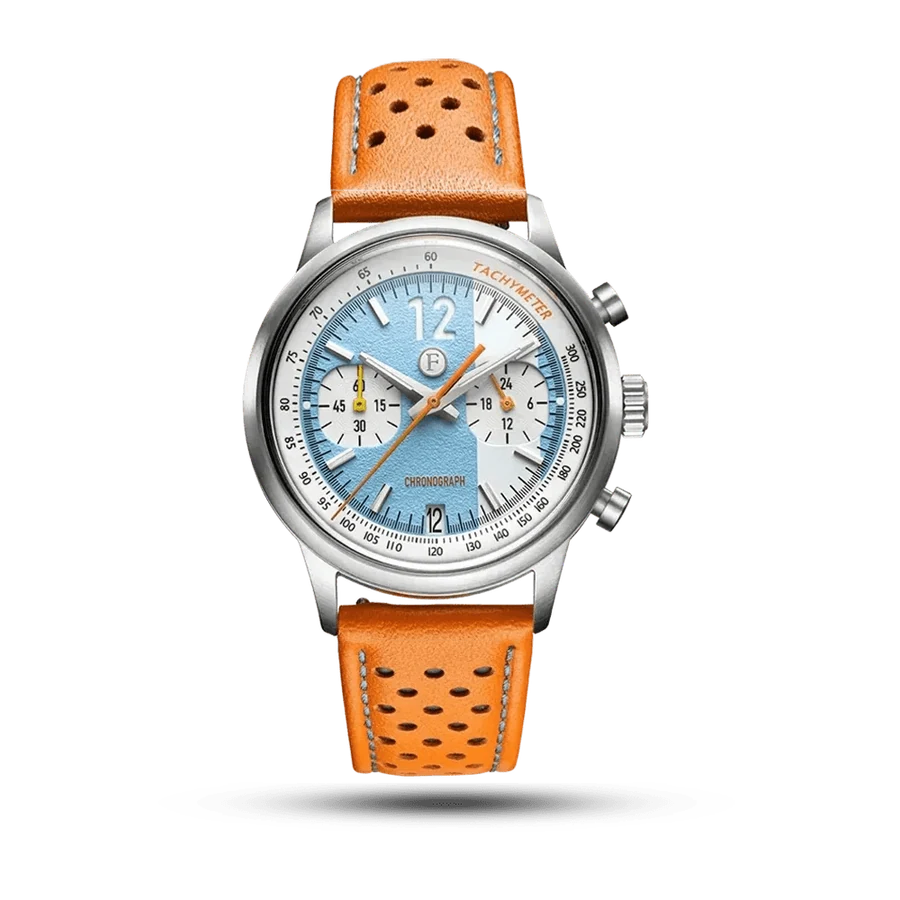
Race Master Chronograph Azul
A blue-and-orange racing chronograph with real wrist presence
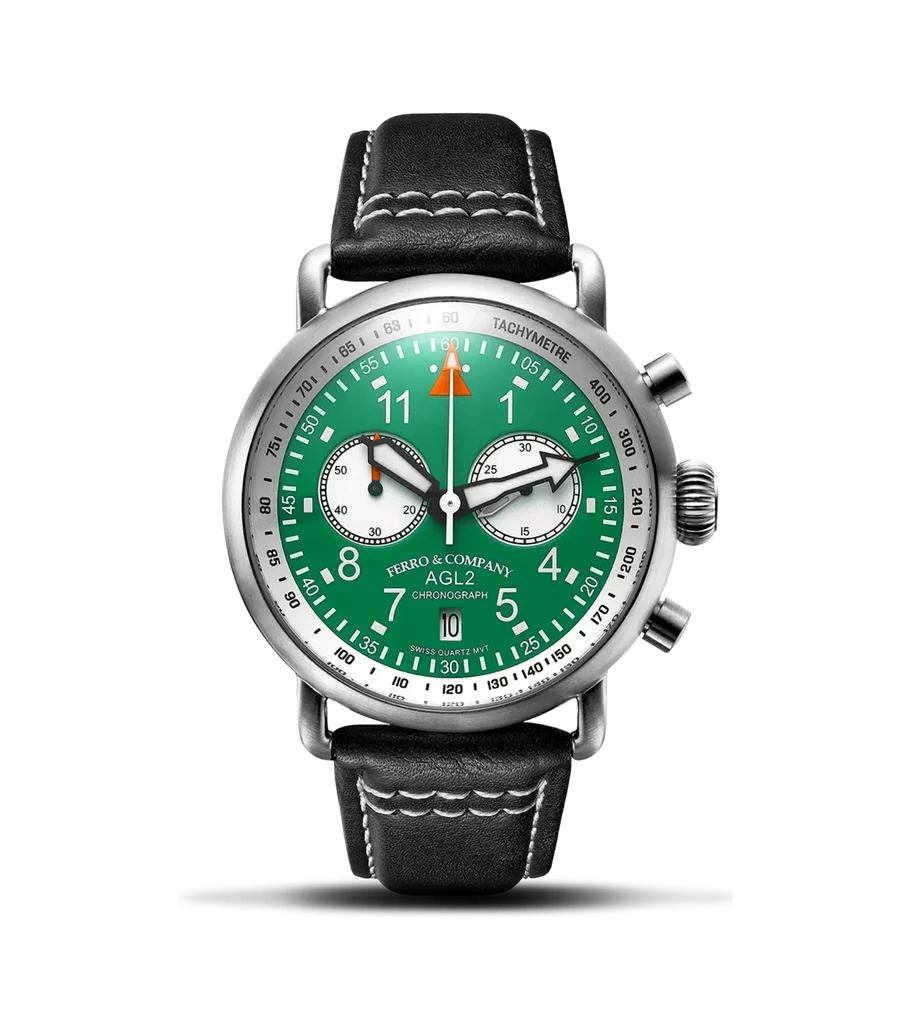
AGL 2 Chronograph Green
A vintage aviation chronograph with a clean green dial and practical quartz timing
A few good questions.
What is a mecha-quartz movement?
A quartz watch with a mechanical mechanism driving the chronograph, giving a crisp pusher feel.
Is mecha-quartz better than quartz?
It feels more mechanical and often resets the chronograph instantly, but it still runs on a battery and costs a little more.
How long does the battery last in a mecha-quartz chronograph?
BODERRY lists about three years for its Goldace; check your watch’s listing.
Is a mecha-quartz chronograph accurate?
Yes. Timekeeping comes from a quartz module, so it is more accurate than a typical mechanical movement.
How we write guides: we explain watchmaking from manufacturer documentation and published standards, and say plainly where numbers vary by brand or movement. Our approach.