
Skeleton, open-heart or exhibition caseback.
Pros and cons.
- Pro: you can watch the movement work.
- Pro: distinctive design.
- Con: harder to read than a solid dial.
- Con: more visible dust or imperfections in the movement.
Affordable skeletons.
BODERRY’s Urban Skeleton is a titanium automatic with a 72-hour reserve, and the Windmill is a hi-beat steel one. Both are listed at 5 ATM.
What to check.
- The reserve and movement named on the listing.
- Hand and lume contrast against the open dial.
- The water rating; many skeletons are splash-resistant only.
Skeleton watches we reviewed.
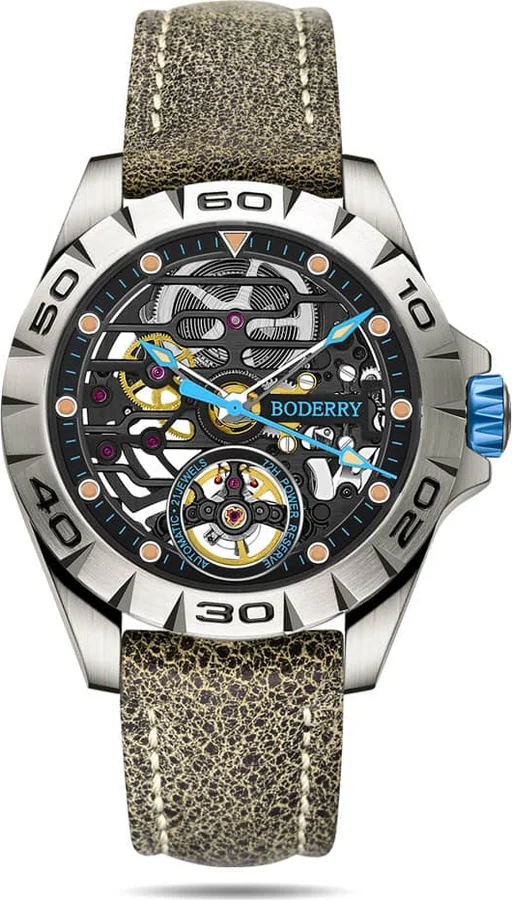
Urban Skeleton V2.0 Titanium Automatic (Blue)
A titanium skeleton automatic for $149
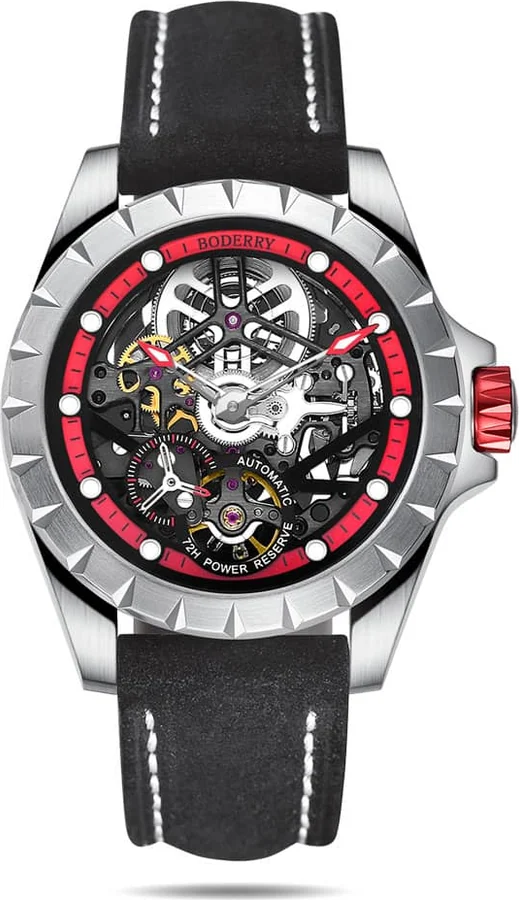
Windmill Skeleton Hi-Beat Automatic (Red Dial, Leather)
A skeleton automatic with a wind-shaped seconds design
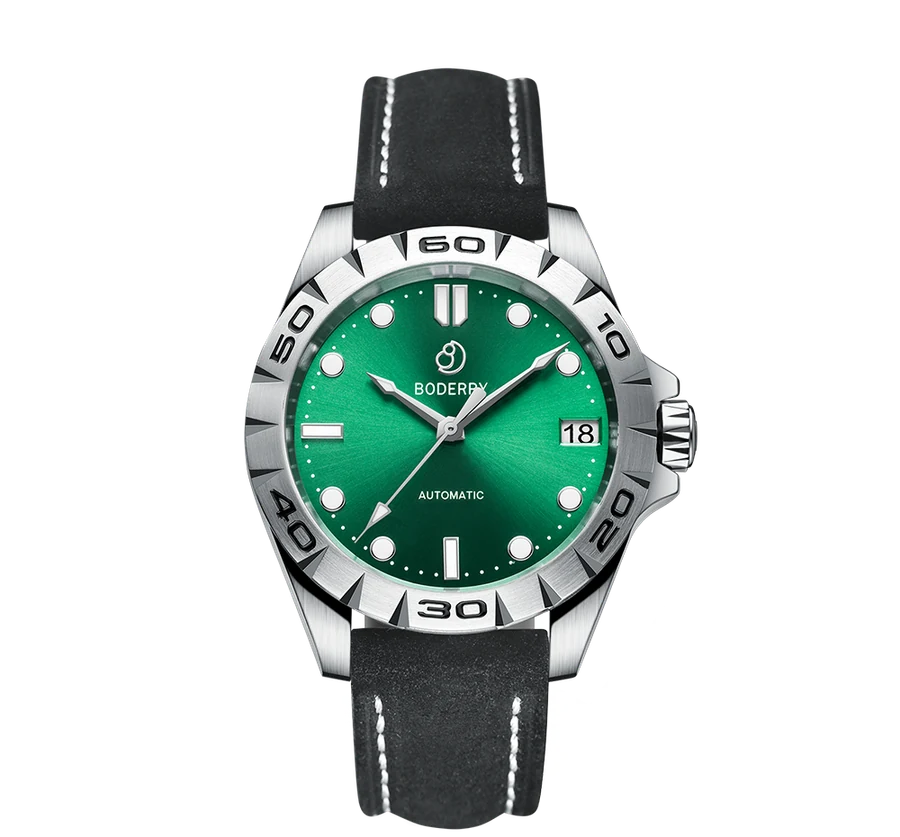
Urban Date Aurora Green
A green date dial with a full three-day automatic reserve.
A few good questions.
What is a skeleton watch?
A watch with a dial and often a movement cut away so the mechanism is visible from the front.
Is a skeleton watch worse for reading the time?
It can be, because the open dial gives less contrast; check the hands and lume before you buy.
What is the difference between skeleton and open-heart?
A skeleton dial is cut away broadly, while an open-heart dial has a window that shows the balance wheel on an otherwise solid dial.
Are skeleton watches fragile?
Not inherently, but a skeleton movement shows dust more easily, and many have modest water ratings.
How we write guides: we explain watchmaking from manufacturer documentation and published standards, and say plainly where numbers vary by brand or movement. Our approach.