
Why it happens.
The hairspring in a mechanical movement is a very fine steel-alloy coil. When it is magnetised, its coils can attract each other and stick, which shortens the spring’s working length and makes the balance swing faster. The watch gains time, sometimes a lot. Quartz watches are far less affected, though a strong field can stop the stepping motor while it is present.
The signs.
- A watch that ran within spec now gains several minutes per day.
- Timekeeping changes erratically.
- On a timegrapher app, the trace becomes messy or the rate jumps.
The compass test.
- Lay a simple compass flat on a table.
- Hold the watch near the compass and move it slowly around it.
- If the needle swings as the watch passes, the watch is magnetised.
How to fix it.
A watch demagnetiser is a small, inexpensive device: place the watch on it, press the button, and slowly lift the watch away. Any watch repairer can also do it in a minute. Then let the watch run for a day and check its rate. Demagnetising does not harm the movement.
Anti-magnetic watches.
ISO 764 sets the baseline for an “anti-magnetic” watch: it must resist a field of 4,800 A/m (about 60 gauss) within a set accuracy. Many modern movements go further with non-magnetic hairspring alloys or silicon: Tissot’s Nivachron and silicon balance springs are examples. They make the problem much less likely, but a strong magnet can still affect other parts.
How to avoid it.
Keep mechanical watches away from magnetic phone cases and mounts, laptop palm rests, speakers, induction hobs and magnetic bag or wallet clasps. Do not store a watch on top of electronics.
Watches with magnetism-resistant balance springs.
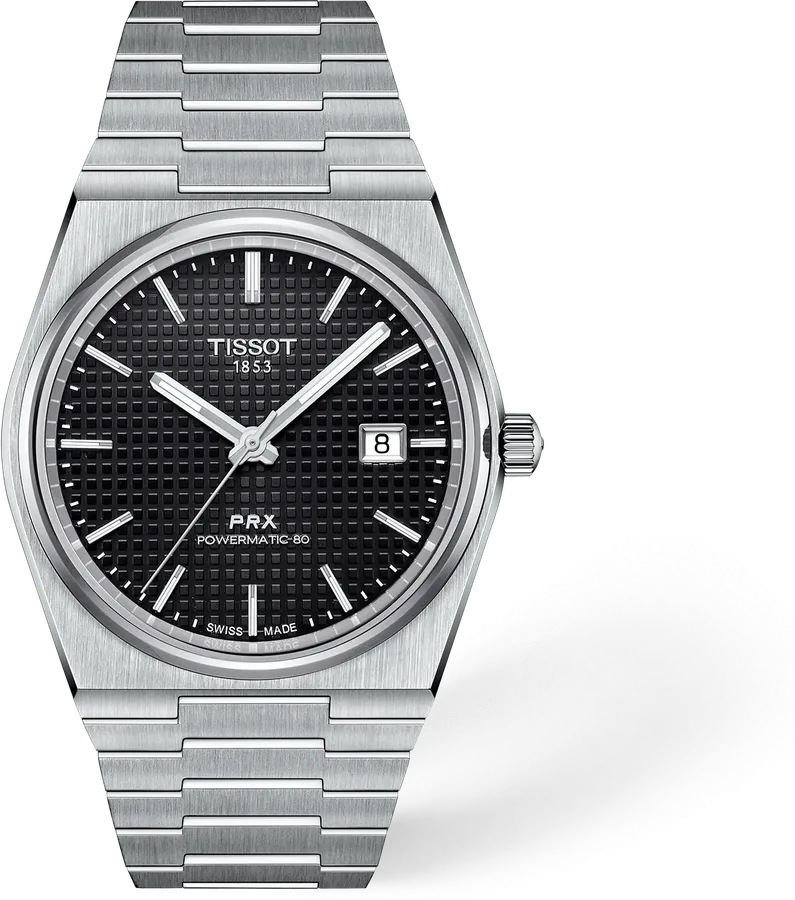
PRX Powermatic 80 Black
The PRX at its most understated
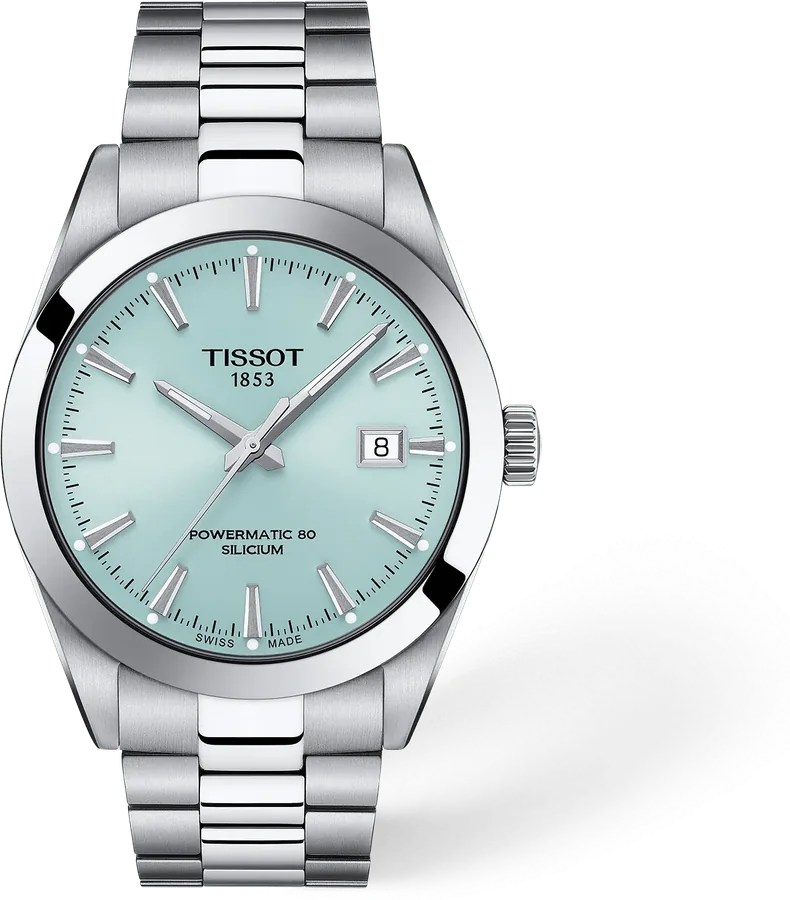
Gentleman Powermatic 80 Silicium Ice Blue
One watch for the office, the weekend and the pool
A few good questions.
How do I know if my watch is magnetised?
A sudden gain of minutes per day is the classic sign. Move the watch around a compass: if the needle swings, it is magnetised.
Can magnetism permanently damage a watch?
Rarely. It usually affects timekeeping only, and demagnetising restores normal running.
Can my phone magnetise my watch?
Yes. Phone magnets, especially in magnetic cases and mounts, are a common cause.
How we write guides: we explain watchmaking from manufacturer documentation and published standards, and say plainly where numbers vary by brand or movement. Our approach.