
Where they come from.
Field watches trace back to wristwatches issued to soldiers in the First and Second World Wars, when reading the time quickly in poor conditions mattered. Military specifications called for a black dial, white numerals, luminous hands, hacking seconds for synchronised timing and a tough case. Those requirements still shape the style today.
What defines one.
- Dial: matte black, cream or khaki, with bold Arabic numerals and minimal text.
- 24-hour track: inner numerals from 13 to 24 for military time on many designs.
- Lume: on the hands and often the numerals.
- Case: brushed or bead-blasted steel or titanium, usually 36 to 40 mm.
- Strap: canvas, leather, a NATO or a simple bracelet.
How to choose.
Pick a size that suits your wrist, a dial colour you will wear daily, and a crystal you will not worry about. A hacking movement lets you set it to the second. Field watches are naturally versatile, so a quick-release strap lets you change its personality cheaply. BODERRY Voyager S72 vs Hamilton Murph.
Field watches we recommend.
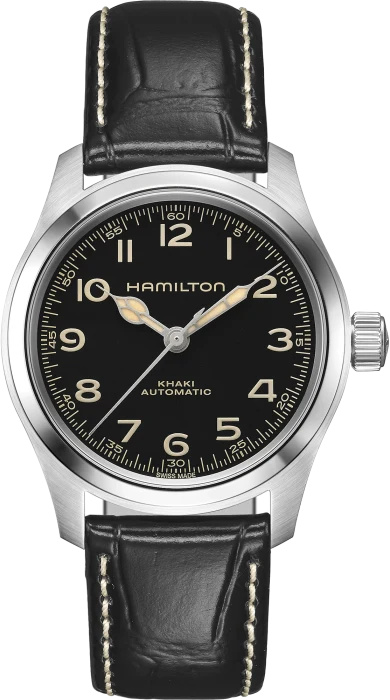
Khaki Field Murph 38
Quiet character. A lasting story.
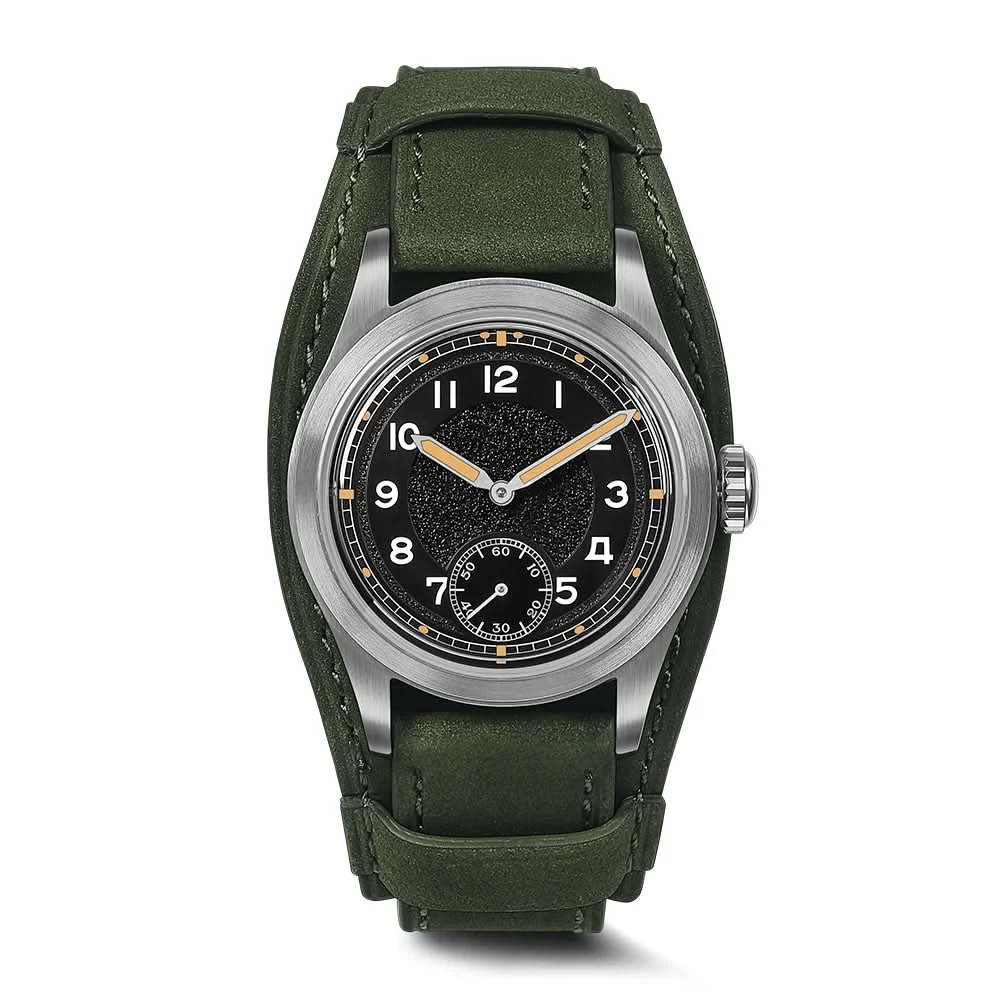
HOU H1 Vintage Field Watch Automatic (Black)
A compact black field watch with a long listed reserve and Bund strap
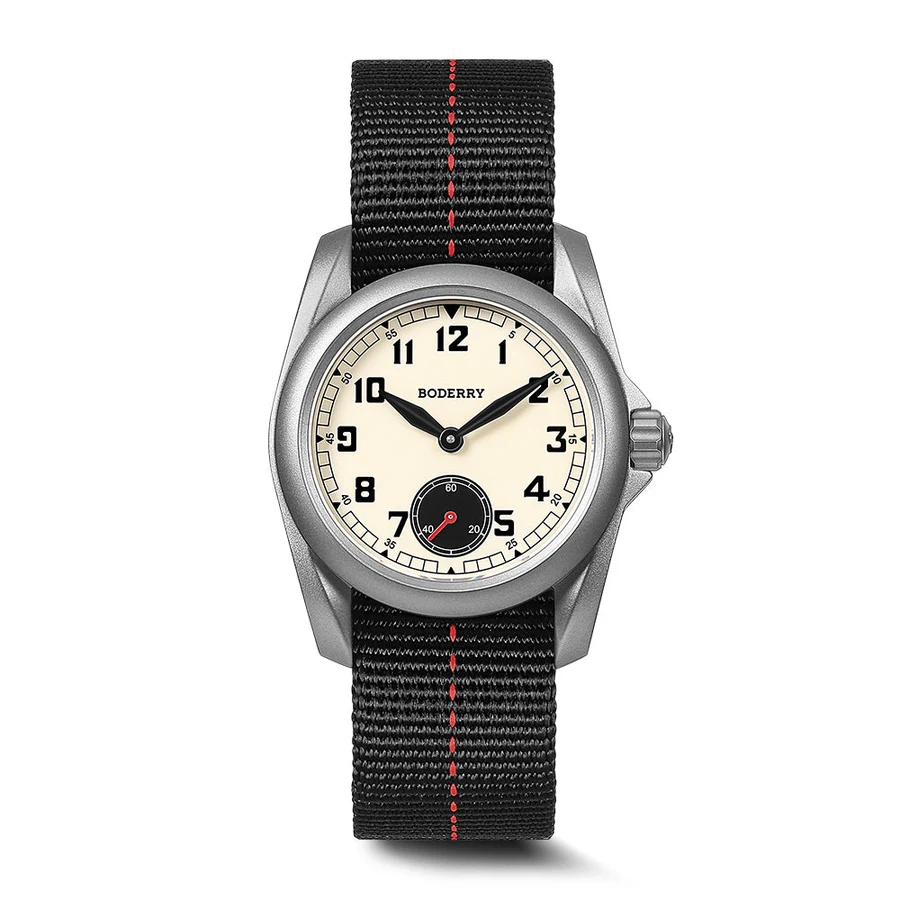
Voyager S72 Cream
Titanium character. A three-day reserve.
A few good questions.
What is the difference between a field watch and a pilot watch?
Both prioritise legibility. Pilot watches are usually larger with a big crown and sometimes a triangle at 12; field watches are smaller and simpler.
What size should a field watch be?
Typically 36 to 40 mm. They were designed to be practical and unobtrusive.
Can you wear a field watch with a suit?
A small, clean field watch on leather can work with casual tailoring, but a dress watch suits formal suits better.
How we write guides: we explain watchmaking from manufacturer documentation and published standards, and say plainly where numbers vary by brand or movement. Our approach.